What is Liquid Democracy?
Who can benefit from using Liquid Democracy and why?
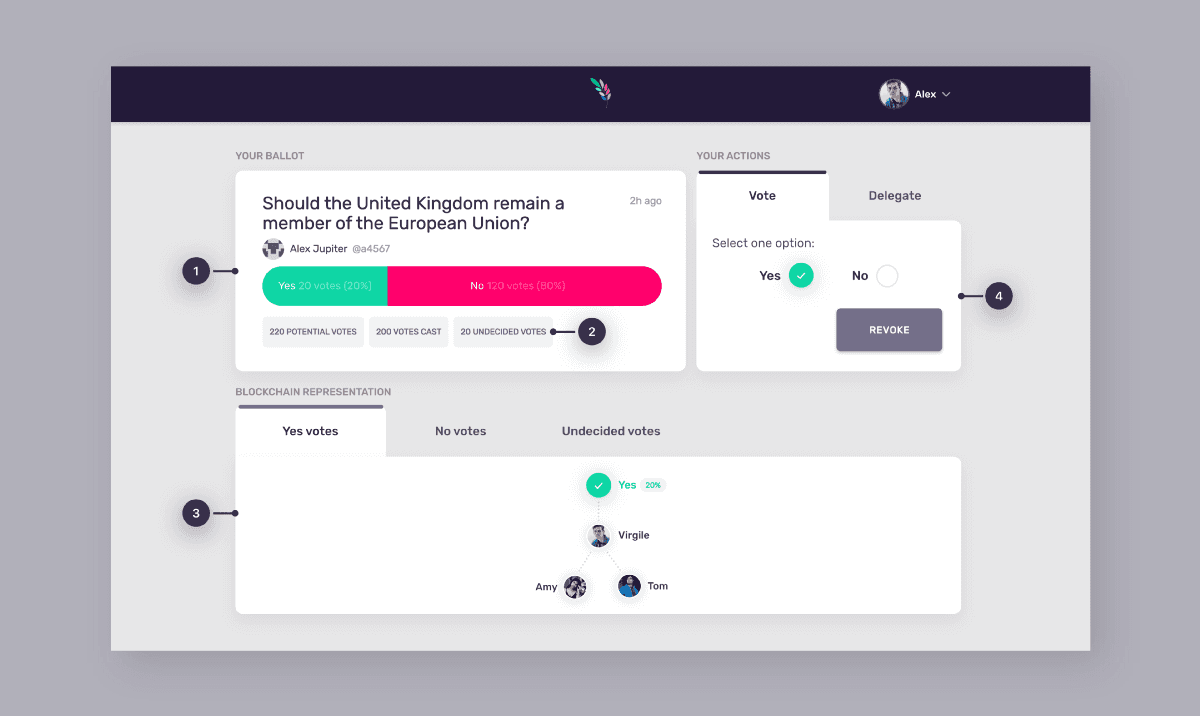
Since direct democracies aren't easily scalable, we can explore ways to create more effective and intelligent forms of representation. Liquid democracy offers a promising solution through vote delegation, enabling individuals to entrust their vote to a knowledgeable expert who can represent their views.
Middleman Paradox
The power of the democratic majority arises from the fact that every individual is assumed to be competent to guide his own life and is politically equal of every other individual. But the voters might not always be knowledgeable on the matter being discussed. That is why today, many governments use a form of representative democracy.
Direct democracy: one person one vote does not scale well.
"As the Internet removes the need for dumb middlemen, it creates the need for smart middlemen. The more we can remove middlemen, the more we need them." — Neil Davidson, The Paradox of the Middle Man
Liquid Democracy (LD)
So far as we know, the idea of Liquid Democracy dates as far back as Lewis Caroll's Principles of Parliamentary Representation (1884). Liquid Democracy is the combination of networks and democracy — a fast, decentralized, collaborative question-answering system, which works by enabling chained answer recommendation.
The voter can decide whether to delegate her vote to a representative on a given issue or simply vote on her own. Say you're an expert on education — wouldn't it be great if you could have your representatives vote for you on all health care issues, but when it came down to education issues, you could cast your own vote? This is what liquid democracy attempts to do.

Promise of LD
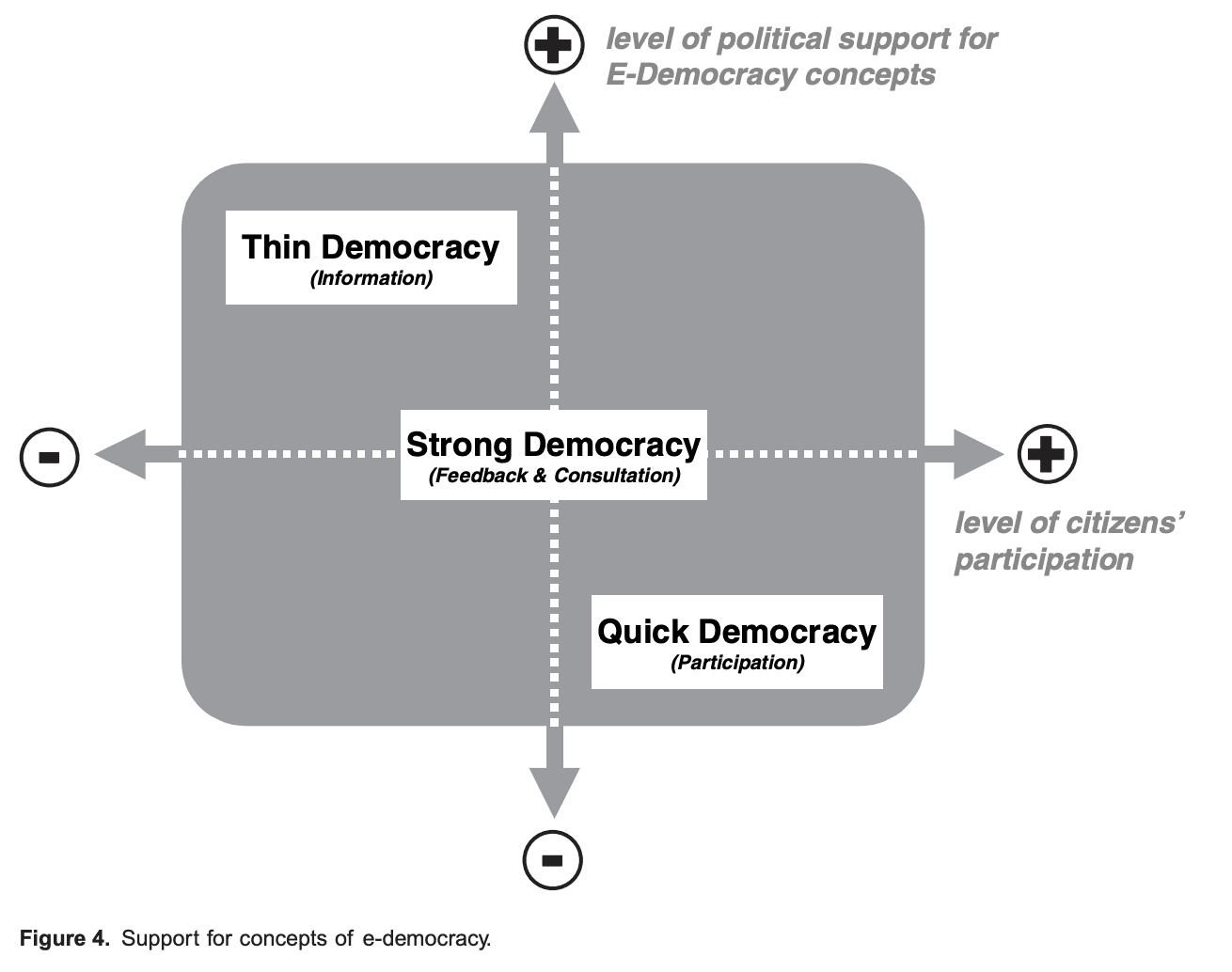
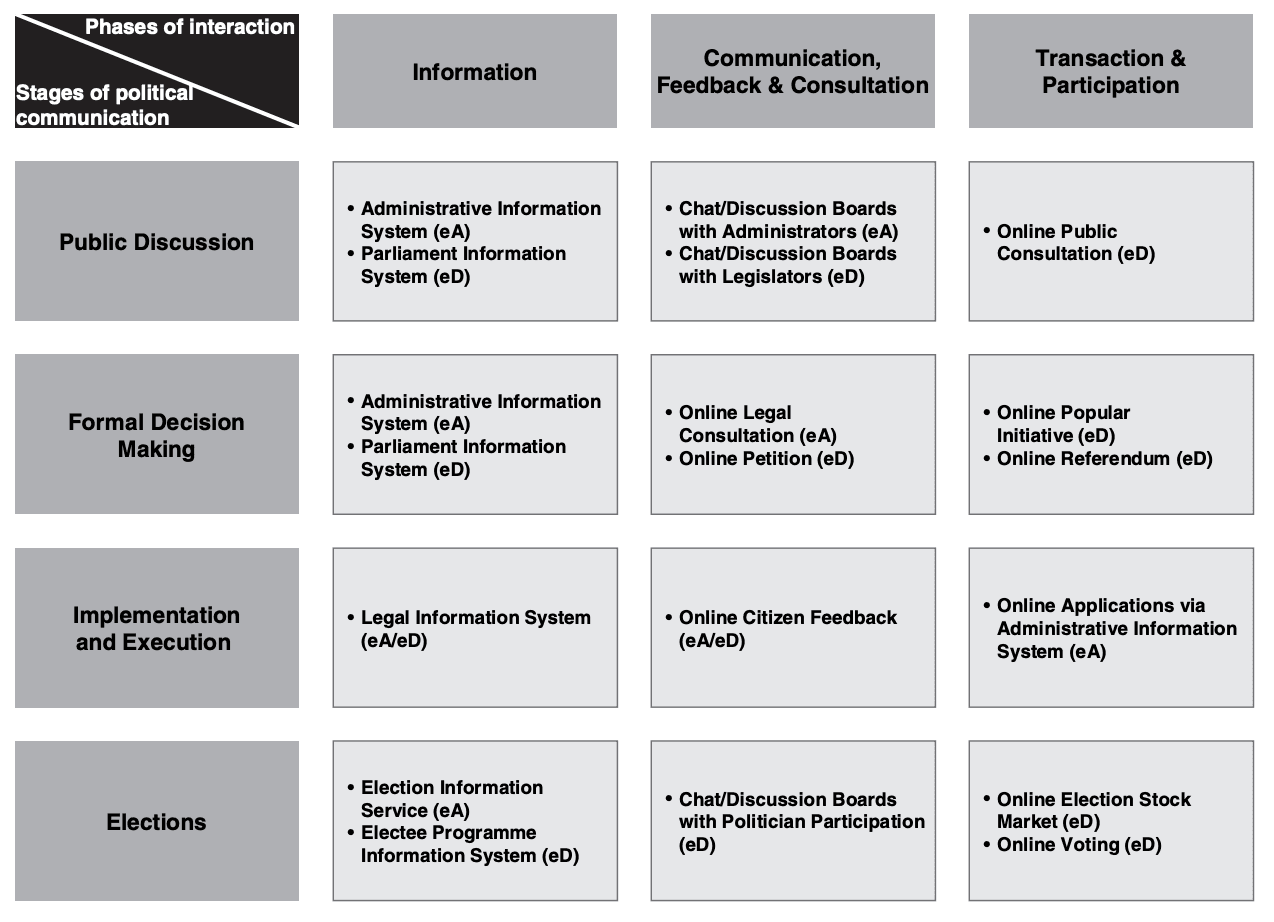
- Approach for increased and better quality citizen participation in democratic processes
- Improved access and delivery of government services
- Digital transformation of political systems
- A component of overall e-government initiatives
Application
When most issues are decided by direct referendum. When nobody has enough time and knowledge for every issue, votes can be delegated by topic. Delegations are transitive and can be revoked at any time.
- Government: Pirate Parties, Australia Flux Network, Demoex Swedish party / Direktdemokraterna, LiquidFriesland Germany
- Business: Google Votes, Civicracy University
- Ecosystems: Argentina Civil Platform, Industrial Workers of the World
Prototype: Delegative Democracy
The prototypical liquid democracy has been summarized by Bryan Ford in his paper, "Delegative Democracy", containing these principles:
- Choice of role — Members can either passively act as an individual or actively act as a delegate.
- Low barrier to participation — Delegates do not have to win competitive elections.
- Delegated authority — Delegates act on behalf of themselves and individuals who choose them.
- Privacy of the individual — All votes by individuals are kept secret.
- Accountability of the delegates — Formal decisions of delegates are typically made public.
- Specialization by re-delegation — Delegates can have both general and specialized authority.
Case Study: German Pirate Party
The Berlin chapter of the GPP enthusiastically adopted the platform shortly after its release, in late 2009. Initially the Pirates made a productive use of LiquidFeedback for developing the program for the 2011 Berlin elections and won an unexpected 8.9% of the vote.
But the unresolved question of how to verify the vote — and hence the identity of voters — became a burden not only for the Berlin chapter but also at a national level. Even though the Pirates made several attempts to resolve the issue, they failed to reach the 2/3 super majority necessary to change the party statute and establish a permanent online assembly.
Tools
Liquid Feedback
Built on the principle of delegated voting. Has a lot of additional features and was being implemented in the Pirate Party since 2009. Use-cases include corporations, cooperatives, political parties, civil society organizations, and municipalities.
Adhocracy
A modular decision-making platform that allows participants to collect ideas, discuss them, and refine them in text propositions. Has been mostly used in civic participation projects in Berlin, but also in political parties such as the Green Party, the SPD, and the German Federal Parliament. Used for meinBerlin, an e-participation platform for residents of Berlin.
Sovereign by DemocracyEarth
Self-sovereign governance platform. Built for Ethereum using Web3. Implements Graph Protocol to read blockchain. Deployable on IPFS. Supports ERC20 and ERC721 tokens. Mobile & desktop responsive UX.