What is OKR (Objectives and Key Results)?
OKR (Objectives and Key Results) is a method for project management. First of all, it is necessary to synchronize team and set goals. The OKR method was developed at Intel, after which the corporation became widespread in large technology companies, including Google, LinkedIn, Zynga.
Core Principles
- Agile Goals — Using shorter goal-setting cycles, companies can more easily adapt and respond more quickly to changes in the market.
- Simplicity — OKRs are easy to understand and use. Companies that have implemented OKR reduce goal-setting time from months to days.
- Transparency — OKRs are made public at all levels, and every employee is given access to all set OKRs. The CEO's OKR is usually published on the Intranet.
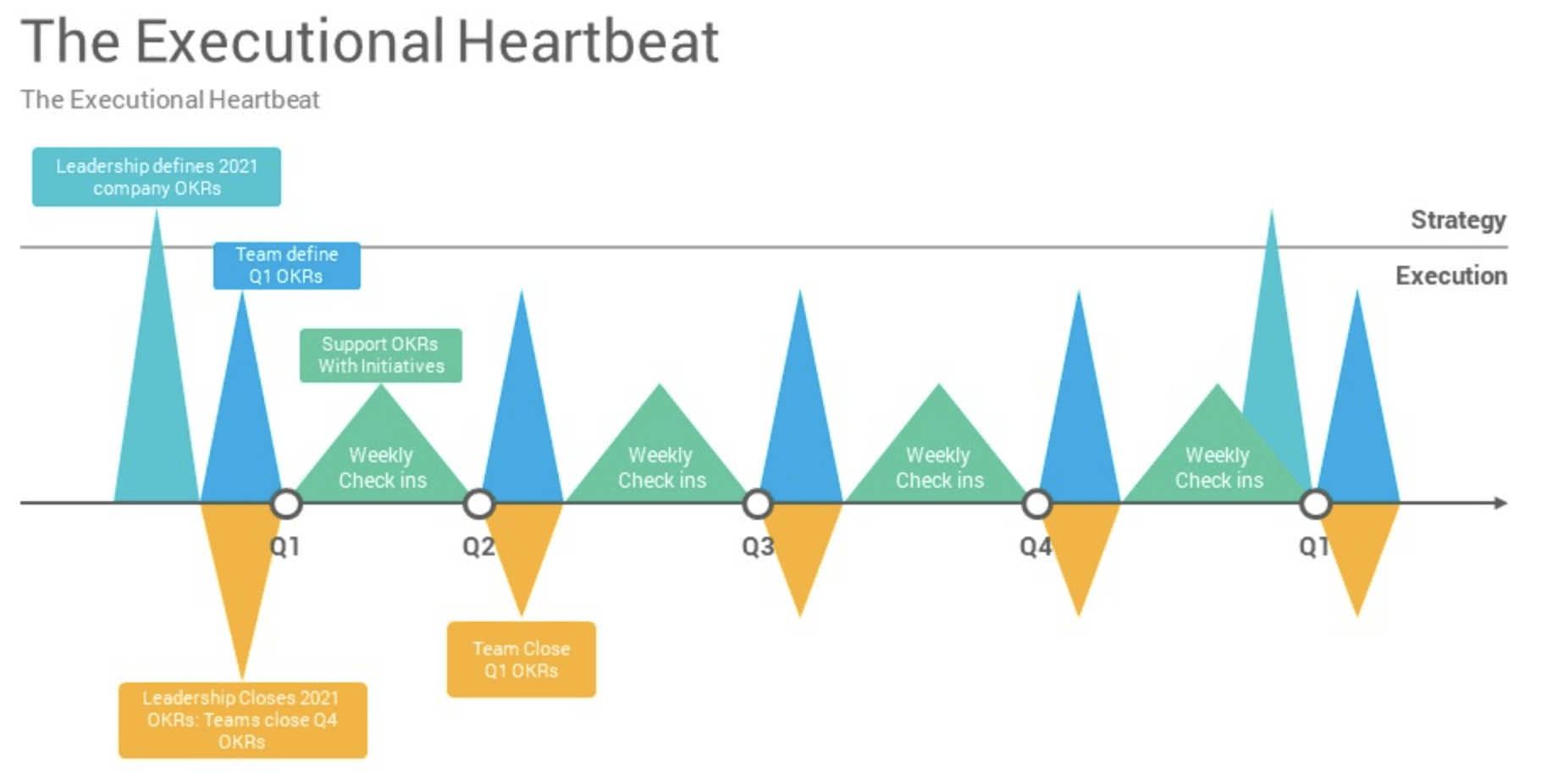
- Embedded Cadences — Strategic cadences (usually annual), tactical cadences (usually quarterly), and operational cadences (usually weekly).
- Bidirectional Goal Setting — About 60% of tactical OKRs set by teams are aligned with the company's strategic goals from the bottom up.
- Ambitious Goals — If a company always achieves 100% of all declared goals, then they are too simple. OKR encourages setting inspirational and ambitious goals.
- Separation of Rewards — Separation of OKRs and rewards/promotions is critical to setting ambitious goals.
Benefits
- Flexibility — Shorter planning cycles allow for more frequent adjustments and stimulate innovation.
- Alignment — Common OKRs improve interaction between teams, resolve interdependencies, and standardize competing initiatives.
- Shorter Goal Setting Time — The simplicity of OKR speeds up and facilitates the goal-setting process.
- Transparent Communications — Teams better understand the goals and priorities of the organization.
- Employee Engagement — The bottom-up approach links individual employees to the company's goals.
- Autonomy and Responsibility — Teams choose what to do to achieve their OKRs with clear success criteria.
- Focus and Discipline — The small number of goals allows the organization to focus on selected initiatives.
Implementation — Definition of Done
- Structure and clarity: Are goals, roles, and execution plans on our team clear?
- Psychological safety: Can we take risks on this team without feeling insecure or embarrassed?
- Meaning of work: Are we working on something that is personally important for each of us?
- Dependability: Can we count on each other to do high-quality work on time?
- Impact of work: Do we fundamentally believe that the work we're doing matters?